
Most fish don’t know what water is.
When you live inside the same environment for long enough, it becomes invisible. You stop questioning it. You stop noticing how it shapes your movement, your behaviour, and your capacity to adapt.
This metaphor feels increasingly relevant when we look at the growing concern around cognitive decline.
Rates of memory issues, brain fog, reduced concentration, and neurodegenerative conditions are rising – not only in older populations, but increasingly in midlife and earlier. While ageing plays a role, it no longer explains the full picture.
What we’re seeing is not just a problem of the brain.
It’s a reflection of the conditions the body and nervous system are operating within.

The modern environment and the stressed nervous system
Today, many people are living with:
- Chronic stress and constant mental stimulation
- Poor or disrupted sleep
- Irregular rhythms and lack of true rest
- Metabolic and inflammatory strain
- Exposure to environmental toxins and biotoxins
- Ongoing emotional load and unresolved stress responses
From a nervous system perspective, these inputs matter deeply.
The nervous system is the interface between the brain, the body, and the environment. When it perceives ongoing demand or threat — whether physical, emotional, or cognitive — the body shifts into survival prioritisation.
In this state:
- Repair and regeneration are downregulated
- Memory, learning, and cognitive flexibility suffer
- Inflammation increases
- Energy is diverted away from higher cognitive function
Over time, this creates the conditions in which cognitive symptoms can emerge.
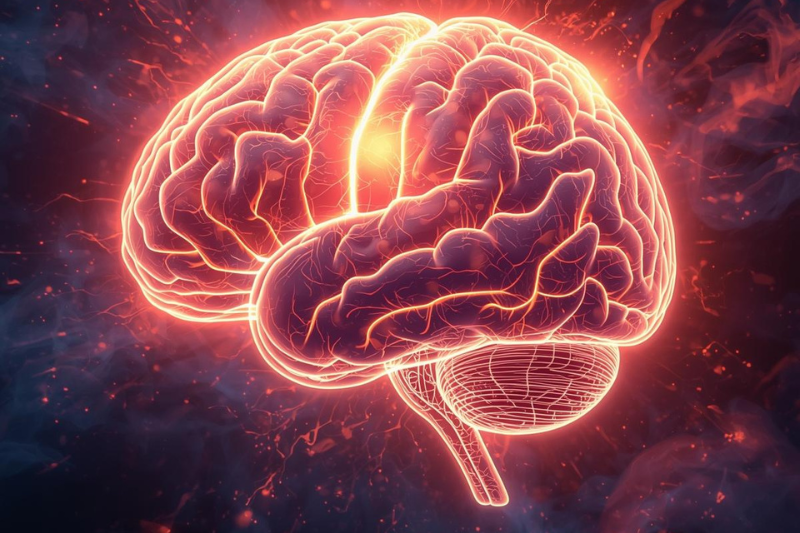
Cognition does not decline in isolation
One of the most important things to understand about brain health is this:
Cognition does not decline in isolation.
It declines within the context of the whole system. There has been a lot of talk lately about the correlations between menopause and dementia and the prevalence of higher rates of dementia in women than men. These changes that occur in the loss of grey matter, which are areas involved in memory and emotion – doesn’t just change because oestrogen and progesterone levels decline – it is part of a much bigger system, NEVER in isolation.
When the nervous system is chronically overloaded, the brain is asked to function in an environment that does not support clarity, integration, or restoration. No amount of cognitive effort or additional hormones for that matter can compensate for this indefinitely.
This is why approaches that look only at the brain often fall short.

Shifting the conditions, not forcing the outcome
Supporting cognitive health from a nervous system lens is not about pushing the brain harder or adding more interventions.
It’s about changing the conditions the system is operating within.
This includes:
- Reducing overall stress load, not just “managing” stress
- Supporting nervous system regulation and a sense of internal safety
- Improving sleep quality and circadian rhythm
- Addressing metabolic and inflammatory drivers
- Becoming conscious of the internal and external environment shaping daily life
- Making choices that support coherence rather than constant stimulation
When these conditions shift, cognition often begins to improve, not because the brain is being targeted directly, but because the system finally has the capacity to heal.

A different way of thinking about healing
Rather than asking, “How do I fix my brain?”, a more helpful question may be:
“What conditions does my nervous system need in order to function well?”
This perspective changes everything.
It moves us away from blame and effort, and toward understanding, support, and sustainable change.
This is the foundation of the work I share and the lens I’ll be exploring in my upcoming free workshop, Creating the Optimal Conditions for Healing, via Zoom on Monday, 9 February at 7pm. I truly believe the health of the Nervous System is the answer to all our questions about health and healing.
What becomes more profound is that when we begin to understand the water we’re swimming in, we gain the ability to change it.
I would love for you to join me on the 9th for this free online workshop. Please note registration is required for the event – so please make sure to register to receive the zoom link – Creating the Optimal Conditions for Healing.


